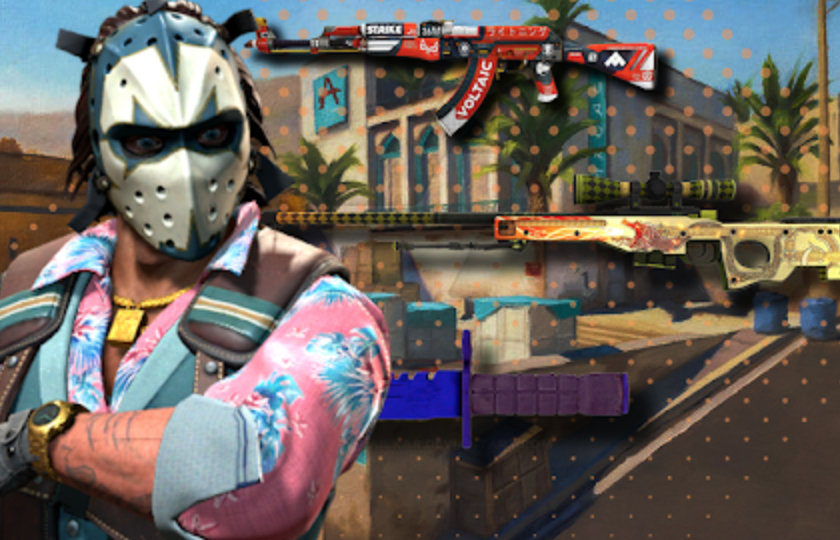








Every economy attracts opportunists. From Wall Street’s high-frequency traders to in-game exploiters, manipulation is a universal temptation. In Counter-Strike 2, that temptation took the form of automated bot networks and shadow market schemes that inflated prices, distorted cs2 skin odds, and ultimately destabilized the entire cs2 skin market. When the crash came in 2025, many blamed Valve’s patch — but deeper analysis reveals that invisible bot farms were already eroding the system’s foundation.
The Rise of Automation: How Bots Took Over the Market
At first, automated trading bots seemed harmless — even helpful. They facilitated quick trades, stabilized liquidity, and helped price discovery for common skins. But soon, industrial-scale “bot farms” emerged, using hundreds of accounts to simulate market activity and manipulate prices. These farms weren’t run by players — they were algorithms, programmed to exploit every inefficiency in the cs2 skin market.
By setting buy and sell loops across multiple accounts, these bots created artificial scarcity and inflated price floors. The result was a market that looked vibrant — but was secretly hollow.
How Manipulation Worked: Synthetic Liquidity and False Signals
Market manipulators thrive on perception. Their bots spammed microtransactions at just the right intervals to convince real traders that demand was rising. This technique — known as “wash trading” in financial markets — created fake volume data that lured investors to buy at inflated levels.
| Manipulation Tactic | Description | Effect on Market |
|---|---|---|
| Wash Trading | Buying and selling the same skin between bot accounts | Artificial volume increase |
| Price Laddering | Gradually raising listing prices across accounts | Illusion of demand growth |
| Spoof Orders | Fake listings to influence price psychology | Volatility manipulation |
| Farm Inflation | Mass farming low-value cases | Supply distortion |
When these techniques collided with Valve’s patch altering cs2 skin odds, the illusion broke. Real liquidity vanished, and prices collapsed like a house of cards.
From Game to Grey Market: The Hidden Economy
The collapse exposed just how intertwined CS2’s official and unofficial markets had become. External platforms, some connected to cs2 esports betting sites, allowed users to trade, bet, or even stake skins for cryptocurrency. These sites created complex feedback loops between market speculation and gambling ecosystems.
For example, when bot activity inflated a knife’s price, it indirectly boosted its betting collateral value on cs2 skin betting exchanges. This ripple effect meant manipulation in one arena instantly distorted others — including cs2 live betting markets tied to inventory liquidity.
The Role of Crypto Integration
While blockchain was designed to promote transparency, bad actors used crypto rails to launder profits from manipulated trades. Through cs2 betting eth and peer-to-peer transactions, manipulators could move large volumes of value without detection. This blurred the line between gaming assets and financial instruments, raising regulatory concerns across jurisdictions.
Detecting the Patterns: When Volume Lies
Economists studying digital markets noticed suspicious anomalies before the crash. Trading volumes spiked at odd hours, prices followed identical patterns across unrelated items, and thousands of new accounts appeared within minutes of major drops. These signatures were textbook signs of automated manipulation.
Analysts cross-referenced this data with cs2 gold odds fluctuations and found a direct correlation: whenever rare drop probabilities increased, bot activity intensified. Bots were literally programmed to chase the math.
How Bots Exploited Market Psychology
Bot manipulation isn’t just technical — it’s psychological. By creating fake price surges, they triggered “FOMO” (fear of missing out) among real players. Buyers rushed in, validating the illusion and allowing manipulators to exit at profit. It’s the same emotional dynamic seen in meme-stock rallies or crypto pumps.
Collateral Damage: When Honest Players Lose
When the bubble burst, legitimate traders and collectors were left holding devalued assets. Some lost thousands in digital inventories. Even more damaging was the erosion of faith — without trust, no market can function.
The fallout spilled into betting ecosystems, as cs2 bookmakers and cs2 esports bet operators struggled to price risk accurately. Many froze transactions or switched to fiat-only models to avoid exposure to manipulated skin values.
Market Data Snapshot: Pre- and Post-Bot Crash
| Metric | Pre-Crash (Q1 2025) | Post-Crash (Q3 2025) | Change (%) |
|---|---|---|---|
| Daily Trade Volume | 8.2M | 2.6M | -68% |
| Average Item Value | $82.40 | $31.20 | -62% |
| Verified User-to-User Trades | 2.3M | 0.9M | -60% |
| Bot-to-Bot Transactions (est.) | 5.9M | 0.3M | -95% |
These figures demonstrate how the perceived boom was largely synthetic. Once anti-bot protocols were introduced, volume collapsed — revealing the hollow core beneath the surface.
The Ethical Dilemma: Is Automation Always Bad?
Not all bots are villains. Some automated systems enhance efficiency by stabilizing spreads, matching trades, and providing instant liquidity — just like algorithmic market makers in traditional finance. The danger arises when these systems are weaponized for manipulation instead of balance.
A regulated framework — similar to those governing esports betting or financial exchanges — could distinguish between fair automation and exploitative farming.
How Regulation Could Help
Experts argue that Valve and associated markets should implement anti-manipulation policies modeled after real-world securities law. These could include:
- Mandatory KYC (Know Your Customer) verification for high-volume traders
- AI-based detection of wash trading patterns
- Public audit trails for large transfers and rare-item drops
- Cross-platform cooperation between cs2 esports betting sites and market APIs
Such reforms would mirror anti-fraud structures used in legitimate esports betting sites, bringing accountability to a system long driven by secrecy.
The Blockchain Solution: Transparency as a Weapon
Integrating blockchain verification — particularly through systems tied to cs2 betting eth or decentralized identity protocols — could make it impossible for manipulators to hide behind anonymous accounts. Every transaction would be traceable, timestamped, and cryptographically verifiable.
That’s why several developers are building hybrid systems that combine open-ledger tracking with privacy controls, balancing transparency and user safety.
Community’s Response: The Fight Against Exploitation
Following the crash, community watchdog groups formed to monitor trade activity and expose manipulation rings. Using data scraping, on-chain analysis, and behavioral pattern detection, they identified hundreds of linked bot accounts and mass-reported them to Valve.
Grassroots vigilance has already helped restore partial stability — echoing how transparency-oriented esport betting operators rebuilt credibility after similar scandals.
Psychological Impact: When Players Stop Trusting the Game
Perhaps the most insidious damage isn’t financial — it’s emotional. When players feel that outcomes, odds, or prices are manipulated, the joy of gaming turns into cynicism. That distrust infects everything from trading to cs2 skin betting to participation in tournaments.
Studies in behavioral economics confirm that perceived unfairness reduces engagement — even when the actual odds remain statistically similar. In other words: fairness must not only exist; it must be visible.
Expert Commentary
Dr. Alexei Novak, an economist specializing in digital asset ecosystems, summarizes:
“The CS2 market didn’t collapse solely because of one patch — it collapsed because players stopped believing in the system. Once data proved that bots shaped price discovery, trust evaporated. Transparency isn’t optional; it’s the foundation of value itself.”
The Path to Recovery
Rebuilding requires more than patch fixes — it demands systemic reform. Valve must strengthen detection algorithms, integrate blockchain transparency, and collaborate with verified cs2 esports betting sites to synchronize market integrity. Only then can the cs2 skin market regain legitimacy.
Final Thought
The story of CS2’s bot-driven collapse isn’t just a tale of greed — it’s a cautionary lesson in trust. When automation outpaces accountability, fairness dies. The good news? Communities, analysts, and technology can rebuild what manipulation destroyed. If transparency, regulation, and ethical automation align, the cs2 skin betting and trading ecosystem won’t just recover — it will evolve into the most transparent digital marketplace in esports history.