







When South Korea bestows a state decoration upon an athlete, it is never just about a trophy; it is about the soul of a nation. Usually, these honors are reserved for the giants who have reshaped Korea’s sporting identity—the Olympic champions who stood on the podium while the national anthem played, and the world-record holders who made the flag feel heavier in the best possible way.
On January 2, 2026, that history was rewritten. In a moment that hit esports fans like a slow-motion highlight reel, Lee “Faker” Sang-hyeok was awarded the Cheongnyong-jang (Blue Dragon Medal) by President Lee Jae-myung.
More Than a Merit: A Testament to Persistence
This isn't just "news." It is the emotional culmination of a 14-year odyssey. For every kid who was ever told that their passion for gaming was a "waste of time," Faker’s medal is a quiet, powerful rebuttal.
- It is for the lonely hours of practice in the SKT T1 basement in 2013.
- It is for the tears shed after the heartbreaking finals loss in 2017.
- It is for the unprecedented 2023–2025 "three-peat" at Worlds that proved the "Unkillable Demon King" could defy time itself.
The Human Narrative: From Gamer to National Icon
By placing Faker alongside football icon Son Heung-min and figure skating queen Kim Yuna, Korea is acknowledging that the "sweat" of a gamer carries the same emotional weight as that of a marathoner.
When Faker accepted the medal, he didn't just speak of his own glory. He spoke of the fans who stayed up until dawn to watch him play and the teammates who shared his burden. In his own words, this medal is a "source of pride for everyone who loves Korean esports." It is a reminder that excellence, regardless of the arena, is a universal human experience. Faker didn't just win a game; he earned the right to be remembered as a National Hero, proving that a decade of discipline can turn a "niche hobby" into a pillar of national identity.f f f f f f f f f f f f f f f f f f f f f f s s s s s s s s s s
Faker Becomes First Esports Player Honored with the Blue Dragon Order
What is the Cheongnyong-jang?
The Cheongnyong-jang is the 1st Class of the Order of Sport Merit (체육훈장). Unlike gaming trophies, this is a state-issued honor listed on the South Korean government’s official portal. It is awarded for "exceptional contribution to national prestige through sports."
The medal comes in four prestigious forms:
- The Badge
- The Star
- The Lapel Badge
- The Ribbon
Bridging the Gap: Faker vs. Son Heung-min
To understand the gravity of this award, one only needs to look at its previous recipients. In 2022, Son Heung-min, the Premier League Golden Boot winner and captain of the national football team, received the same Blue Dragon Medal.
By awarding Faker the same honor as global icons like Son Heung-min and Olympic champion Kim Yuna, the South Korean government is sending a clear message: Esports excellence is national sporting excellence.
A Paradigm Shift for Esports
Faker receiving the Blue Dragon Medal marks a historic turning point. It reframes esports not as a "niche hobby" or "youth culture," but as a pillar of modern competition. For the first time, the "sweat" of a pro gamer is officially recognized as having the same national value as that of a traditional athlete.
The Faker Phenomenon: Why Lee Sang-hyeok is the Ultimate Esports Benchmark
If esports has a "GOAT" (Greatest of All Time) conversation, Lee "Faker" Sang-hyeok isn't just a participant—he is the gold standard. Since his 2013 debut with T1, Faker has transcended the game, becoming a global icon whose name carries the same weight as Jordan, Messi, or Brady.
A Resume Without Equal
Faker’s career is defined by longevity and an unprecedented trophy room:
- The Unrivaled Champion: The only player to lead his team to five World Championship titles (2013, 2015, 2016, 2023, 2024), along with multiple MSI trophies and over 10 LCK regional titles.
- Hall of Legends Inductee: In 2024, Riot Games officially recognized him as the inaugural inductee into the LoL Esports Hall of Legends, cementing his status as the sport's first true "Hall of Famer."
- The T1 Legacy: Remaining with a single organization (T1) for over a decade, he has built a brand that is synonymous with winning and professional excellence.
The "Faker Effect" on the Rift
Faker is famous not just for what he wins, but how he wins. Known for his "unkillable" demon king persona, his playstyle is a blend of:
- Cold-Blooded Consistency: Even in high-stakes "win-or-go-home" scenarios, his fundamental play remains flawless.
- The Clutch Factor: A unique ability to find a game-winning "play" in a losing situation—a trait that makes him a nightmare for oddsmakers and a hero for fans.
League of Legends Explained: From Summoner’s Rift to the Betting Slip
League of Legends (LoL) is a 5v5 Multiplayer Online Battle Arena (MOBA) that has become the gold standard of global esports. For the uninitiated, it is a high-speed "chess match" where two teams battle to destroy the enemy Nexus.
However, for those looking into LoL betting , the game offers a layer of complexity and data-driven opportunities that few other sports can match.
The Core Mechanics of the Wager
To bet successfully on League of Legends, one must understand the "invisible" battle for resources. Matches aren't just won by kills; they are won through:
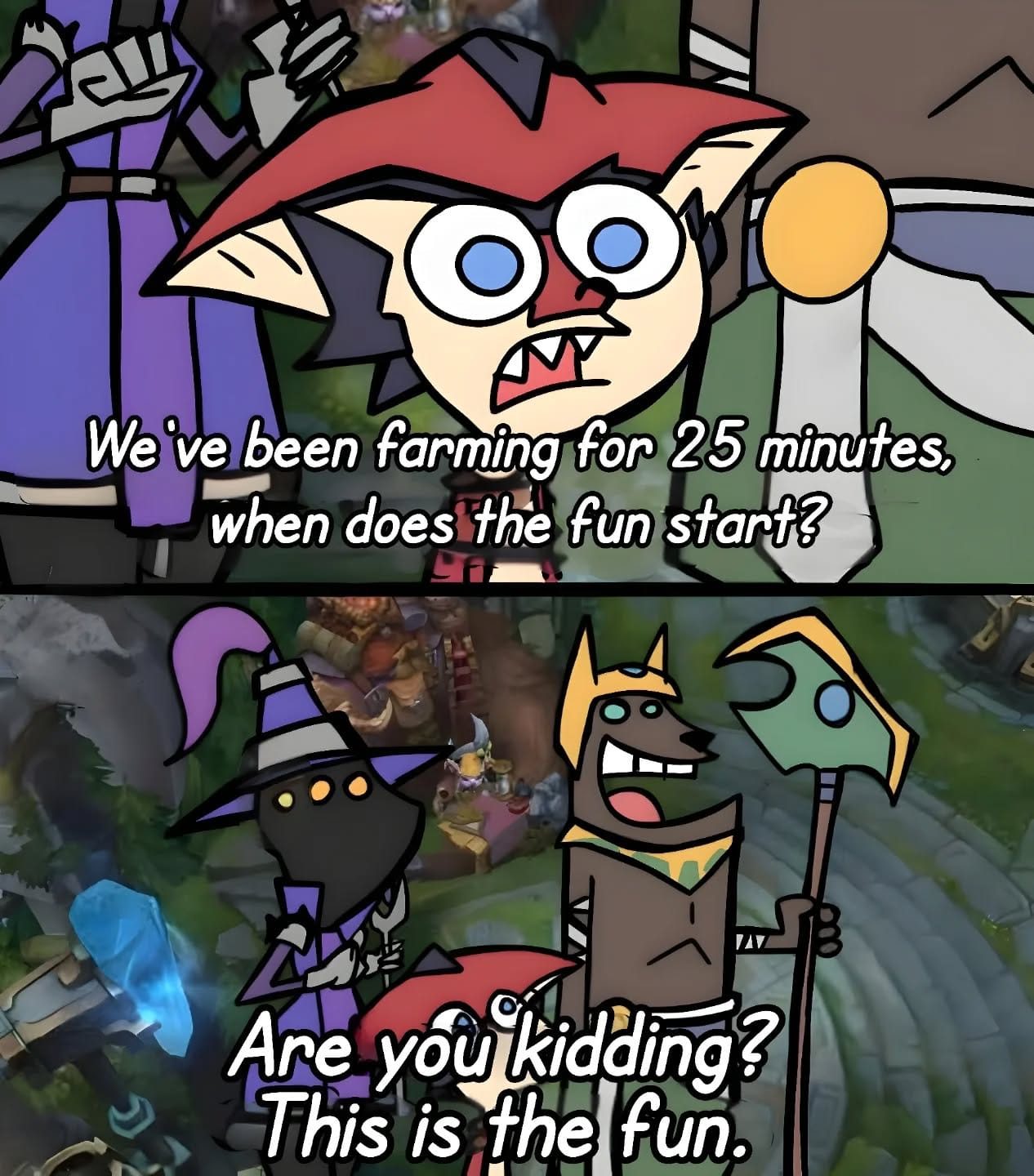
- Gold & Resource Farming: Monitoring CS (Creep Score) helps bettors predict which team is hitting "item spikes" first.
- Objective Control: Dragons and Barons are the most popular live betting markets. These objectives provide buffs that often decide the outcome of a match.
- Vision & Map Control: Much like a point spread in football, "map pressure" tells you who is actually in control, even if the kill score is tied.
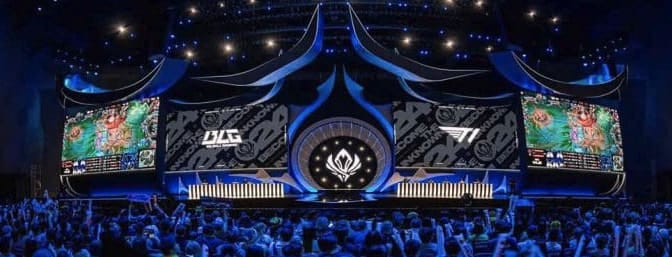
The Professional Ecosystem: Where the Action Happens
The LoL esports calendar provides a structured environment for consistent betting:
- Regional Leagues (LCK, LPL, LEC, LCS): These offer daily and weekly matches where bettors can track team form and "meta" shifts.
- The Mid-Season Invitational (MSI): A high-stakes clash of champions, perfect for outright winner bets.
- The World Championship (Worlds): The "Super Bowl" of esports. Worlds attracts the highest betting volume, featuring deep markets like First Blood, Total Kills, and Map Handicaps.
Why LoL is a Bettor’s Favorite
Unlike some sports where luck plays a major role, LoL is a game of variance management. Professional teams like those in Korea’s LCK are known for their disciplined, low-risk playstyles, making them favorites for "Match Winner" bets. Conversely, the aggressive playstyles of China’s LPL often make them the go-to for "Over/Under" on total kills.
Since it is now January 2026, we can move past "reports" and treat this as a landmark historical event. On January 2, 2026, President Lee Jae-myung officially presented the Cheongnyong-jang (Blue Dragon Medal) to Faker, marking the first time in history a professional gamer has received South Korea's highest sporting honor.
What Faker’s National Honor Signals for the Future of Esports
The official conferment of the Cheongnyong-jang (Blue Dragon Medal)—the 1st Class of the Order of Sport Merit—upon Lee "Faker" Sang-hyeok by the South Korean President is more than just a personal milestone. It is a tectonic shift in the global sporting landscape.、

By elevating a "gamer" to the same status as legendary Olympians and FIFA stars, the South Korean government has sent three powerful signals to the world:
1. The Death of the "Niche Hobby" Label
This award officially categorizes esports as a pillar of national soft power. When the President of a G20 nation awards the highest sporting honor to an esports athlete, the debate over whether "gaming is a sport" effectively ends. For global brands and media rights holders, this translates to institutional stability, making the LCK and T1 even more attractive for long-term, high-value sponsorships.
2. Radical Career Legitimacy
State recognition creates a "trickle-down" effect on social perception. This medal provides the ultimate validation for:
- Families & Schools: The "Faker Path" is no longer a gamble; it is a recognized route to national heroism.
- Policy Makers: This paves the way for better athlete welfare, standardized training facilities, and specialized visas for international talent.
- Future Pros: It tells the next generation that their discipline and sweat have the same "intrinsic value" as those on a football pitch.
3. Impact on the Global Betting & Investment Markets
From an analytical and esports betting perspective, this level of state endorsement adds a layer of reliability to the ecosystem.
- Mainstream Financial Integration: National honors often lead to increased regulatory clarity, which in turn attracts "mainstream" capital and more sophisticated, transparent betting markets.
- Data Integrity: As esports moves closer to the government-regulated framework of traditional sports, we can expect higher standards of data reporting and integrity, benefiting both the fans and the analytical community.
The Verdict: A Decade of Excellence Recognized
The Blue Dragon Medal is designed for those who have "meaningfully advanced national standing." For over a decade, Faker has been the face of a digital revolution. This award doesn't just honor his five World Championships; it honors his role in making South Korea the undisputed capital of the esports world.
eSports Pro Entry Ticket
If you dream of following in the footsteps of Faker—from a legendary "Demon King" to a nationally decorated hero—you must understand that the path to pro is not just about "playing games." It is a high-stakes, high-precision career that demands elite cognitive abilities and physical discipline.
Following the historic 2026 ceremony where President Lee Jae-myung awarded Faker the Cheongnyong (Blue Dragon) Medal, the standards for "esports excellence" have never been higher. Here is your roadmap to measuring your potential and the tools you need to get there.
I. Hard Performance Metrics (The "Entry Ticket")
Before committing to a professional career, you must meet these objective benchmarks. If you aren't hitting these numbers, you likely haven't reached the "pro-ready" threshold.
- Server Ranking (The 0.01% Rule): * Metric: You must be in the top 0.01% of your region. For League of Legends, this means Challenger (800+ LP) on the Korean, Chinese, or EUW servers. For Valorant, it is high Radiant.
- Reaction Time: * Metric: Your visual reaction time should be between 150ms and 190ms. The average person is around 250ms.
- How to Test: Use Human Benchmark to find your average over 10 consecutive clicks.
- APM & Precision:
- Metric: For MOBA players, high APM (Actions Per Minute) must be combined with "effective clicking." For FPS players, this is your click-to-kill consistency.
II. Essential Testing & Training Software
Elite athletes use data to improve. You should be using these tools daily to quantify your growth:
1. Aim & Reflex Training (FPS/TPS Focus)
- Aim Lab (Free): The gold standard for performance data. It provides a detailed "Cognitive Profile" that identifies your weaknesses—such as whether you have a bias toward flicking left or if your tracking is unstable.
- Kovaak’s: A more hardcore aim trainer used by pros like TenZ. It’s perfect for isolating specific muscle movements.
2. Strategic & Data Analysis (MOBA/Tactical Focus)
- Mobalytics / SenpAI: These tools analyze your gold income, combat participation, and positioning. They provide a "Spider Graph" that compares your stats directly to pro players.
- OP.GG / Blitz.gg: Use these to track your win rates across different "metas." A pro must be able to adapt to new patches within 48 hours.
3. Cognitive Assessment
- Statespace / Neurotracker: Professional academies use these to test Multiple Object Tracking (MOT). This measures how well you can track 5+ moving targets during a chaotic team fight.
III. The "Pro-Level" Soft Skills
Teams look for more than just raw mechanical skill during tryouts. You need to demonstrate:
- Clear Comms (Communication): Can you give concise, emotionless information while under extreme pressure?
- VOD Review (Self-Correction): Can you watch a replay of your own death and identify your mistake without making excuses?
- Mental Resilience (The Faker Mindset): When you are down 10,000 gold, do you "tilt," or do you look for the one play that can win the gam
IV. A Step-by-Step Action Plan
| Phase | Goal | Recommended Action |
| Step 1: Baseline | Know your talent ceiling | Test your reaction time on Human Benchmark and run an Aim Lab assessment. |
| Step 2: The Grind | Prove competitive dominance | Spend 8–10 hours daily in high-Elo ranked play. Aim for Top 500 on your server within one season. |
| Step 3: Amateur Circuit | Learn the team game | Join a Discord community or amateur team. Compete in "open" tournaments to build a competitive resume (VODs). |
⚠️ A Reality Check for 2026:
With the Order of Sport Merit now including esports, the competition has become global and institutionalized. Most pros are scouted by age 16 or 17. Give yourself a 6-to-12 month window of total dedication. If you aren't seeing a massive leap in your ranking during this time, consider pursuing a career in esports coaching, management, or analytics instead.