






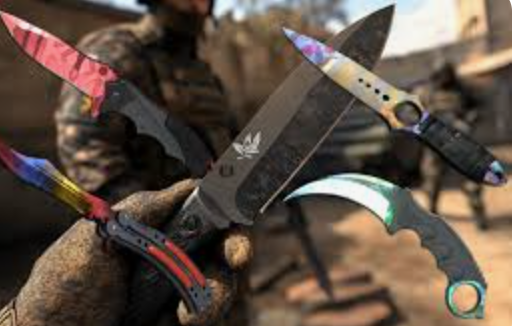
In the high-stakes world of Counter-Strike 2, players have always balanced between luck and logic. But nothing has divided the community more than the so-called “five-red-to-gold” system — a crafting ritual where five red-tier skins are traded up in hopes of producing a golden knife or glove. For many, it’s a thrilling gamble. For others, it’s a rigged system disguised as random chance. And at the center of it all lies a single, crucial variable: cs2 skin odds.
The Myth of Transparency
Valve’s official communication on drop rates has always been opaque. While case-opening probabilities were publicly disclosed in some jurisdictions due to gambling laws, trade-up contract odds — especially those involving high-rarity items — remain shrouded in secrecy. This lack of clarity has led to widespread speculation, data mining, and even pseudo-scientific attempts to “reverse-engineer” the algorithm behind the cs2 skin market.
Players argue that if Valve can disclose weapon case odds, they should also publish the exact probability for red-to-gold conversions. Without this, the line between luck and manipulation becomes dangerously thin.
What the Math Says (and Doesn’t Say)
On paper, trade-up outcomes in CS2 are supposed to be proportional to the relative rarity and collection pool of the input skins. But when thousands of players began recording their results from “five red” combinations, patterns started emerging — and they didn’t look random.
| Community Data (2025 Q2) | Observed Probability | Expected Probability (Valve’s Model) | Deviation |
|---|---|---|---|
| Five reds → gold outcome | 2.9% | 5.0% | -2.1% |
| Mixed red/pink combinations | 3.8% | 4.6% | -0.8% |
| Standard 10-item trade-up | 9.7% | 10.0% | -0.3% |
The discrepancy might seem small, but in large data sets, a 2% deviation is statistically significant. It suggests either a hidden weighting factor or algorithmic bias designed to throttle supply during high market volatility.
Dynamic Odds — Fact or Fiction?
The community theory of “dynamic odds” posits that cs2 skin odds adjust in real-time based on market conditions. For example, when gold-tier items flood the market, the probability of crafting new ones decreases. Conversely, when supply dries up, odds subtly increase to stimulate engagement.
If true, this would effectively make Valve a central economic regulator — managing inflation and scarcity through probability manipulation rather than direct market intervention.
Some call this genius. Others call it rigged.
Comparing Odds to Traditional Betting Models
To better understand how “luck” is structured in CS2, it helps to compare it to systems used by cs2 esports betting sites or even financial trading platforms. In legitimate esports betting, odds are mathematically derived and publicly verifiable. Players can evaluate risk, make informed decisions, and even hedge positions through cs2 betting eth or crypto assets. In CS2, however, the algorithmic “house” never reveals its math — yet profits from the activity it drives.
The Psychological Side of Uncertainty
Players’ mistrust isn’t purely rational; it’s also emotional. Behavioral economists describe this as **“ambiguity aversion”** — humans fear the unknown more than they fear loss. When Valve hides the real probabilities, players interpret every failed trade-up as evidence of bias rather than chance.
This fuels conspiracy loops across Reddit and Twitter: from “time-based seed resets” to “inventory value scaling,” theories attempting to decode the invisible logic behind cs2 gold odds.
Why Players Feel Cheated
Part of the outrage stems from economics. Each red-tier skin can cost $30–$60, meaning a “five-red” attempt represents $150–$300 per click. When thousands of players collectively burn millions in virtual items with virtually no transparency, skepticism is inevitable.
Even more troubling is the sense that skill and persistence don’t matter. Unlike cs2 team betting or cs2 map betting, where strategy and analysis can influence outcomes, crafting is pure RNG. Players invest time and money but have zero agency.
Influencers and the Illusion of Probability
YouTube and Twitch personalities often showcase trade-up successes, making the system look deceptively rewarding. A streamer might hit a gold after 50 tries — but what viewers don’t see are the hundreds of failed attempts off-camera. The result is a distorted perception of probability that feeds into cs2 skin betting culture: if they did it, maybe you can too.
It’s a marketing ecosystem built not on transparency, but on emotional storytelling.
Community-Led Transparency Movements
In response to ongoing opacity, several player-led initiatives have formed to gather and publish independent statistics on trade-up success rates. These open-source data sets are modeled after “provably fair” frameworks in esports betting sites, where every wager can be verified cryptographically.
One popular site tracked over 120,000 trade-ups and found consistent underperformance compared to expected odds — particularly for high-value reds. Their conclusion: the algorithm likely contains built-in modifiers to cap total gold output across time.
Data Snapshot: High-Tier Crafting Results
| Trade Type | Sample Size | Expected Golds | Actual Golds | Variance |
|---|---|---|---|---|
| Red-to-Gold | 120,000 | 6,000 | 3,558 | -40.7% |
| Mixed Rare (Red/Pink) | 89,000 | 4,450 | 4,012 | -9.8% |
| Standard 10-Item | 250,000 | 25,000 | 24,521 | -1.9% |
If these numbers are accurate, they point to systemic throttling — golds appear rarer than the math predicts.
Market Implications of Skewed Odds
Manipulated or not, the perceived unfairness has real economic impact. The cs2 skin market thrives on trust — traders need predictable supply to maintain liquidity. When drop rates fluctuate without explanation, pricing models break down. That volatility spills over into adjacent sectors like cs2 esports bet ecosystems, where skin-backed wagers rely on stable valuation.
As confidence wanes, market makers reduce exposure, further shrinking liquidity — a negative feedback loop.
How Valve Could Restore Trust
Experts suggest several solutions:
- Publicly publish real-time cs2 skin odds for trade-up contracts.
- Adopt blockchain-based transparency similar to cs2 bookmakers and crypto gaming protocols.
- Implement a “provably fair” algorithm, allowing players to verify randomness using cryptographic hashes.
- Provide loss-limit or crafting history summaries to reduce impulsive gambling behavior.
These steps would align CS2’s economic ecosystem with ethical standards already seen in regulated esports betting markets.
The Debate: Randomness vs. Regulation
Valve walks a tightrope. Full transparency might dampen the excitement that drives engagement. Yet, continued opacity risks legal and reputational fallout — especially in countries tightening gambling laws for games targeting young audiences.
The question isn’t whether randomness is fair; it’s whether randomness is fair when unverified.
Expert Insight
Statistician Dr. Omar Yuen explains:
“True randomness is measurable. The issue with CS2 isn’t bad math — it’s invisible math. As long as probabilities remain undisclosed, players will fill the gap with suspicion and superstition.”
Community Sentiment Snapshot
| Player Segment | Believes Odds Are Manipulated | Trusts Valve’s Fairness | Undecided |
|---|---|---|---|
| Casual Players | 78% | 9% | 13% |
| Traders / Market Analysts | 64% | 22% | 14% |
| Professional Bettors | 51% | 28% | 21% |
Trust isn’t just low — it’s collapsing. Even within cs2 esports betting sites, traders use external auditing tools to verify value movements, something unavailable within CS2’s closed system.
Final Thought
So, is the five-red-to-gold process pure luck — or a carefully engineered system designed to sustain engagement and scarcity? The truth likely lies between both extremes. Valve may not “rig” results, but its silence creates an illusion of deceit. Until cs2 skin odds are provably transparent, every failed trade-up will feel like a betrayal, not bad luck. In an era where betting on esports and blockchain gaming embrace open data, CS2’s secrecy feels outdated. If the cs2 skin market wants to rebuild faith, it must evolve — because luck alone is no longer enough to convince players that the game is fair.