







Before diving into the specific strategies that can improve your chances in multicard keno, it's worth answering a question many players ask first: what is the best multicard keno strategy? The best approach balances careful number selection, strategic overlaps, disciplined fast formats like video keno allow rapid sessions bankroll management, and adaptive play. By combining overlapping patterns with smart spot choices and understanding how variance impacts results, players can enhance their consistency without relying on luck alone. Now, let’s explore how to build a strong strategy from the ground up.
Introduction
Keno has long held a place in casinos due to its simplicity and potential for large payouts from small bets. Multicard keno takes that appeal further, allowing players to play multiple sets of numbers on a single draw. With more cards in play, there's increased potential for wins—but also a greater need for strategic thinking. Understanding how to play these cards effectively is key to managing both risk and reward.
What is Multicard Keno?
Multicard keno is a version of traditional keno where players can wager on multiple cards—commonly 4, 10, 20, or even 40—simultaneously. Each card contains a separate selection of numbers, and all are eligible for payouts from the same draw. The rules of number selection remain the same, but the structure allows players to diversify their bets across several configurations.
Unlike single-card keno, where the outcome depends entirely on one set of numbers, multicard keno provides an opportunity to hedge your bets, create overlapping zones, and experiment with combinations that might increase overall return frequency. It's not just more cards; it’s a layered approach to probability and risk.
Why Multicard Keno Is Gaining Popularity
Multicard keno is attracting attention from both seasoned players and casual gamblers for several reasons. First, the pace remains slow and familiar, but the experience becomes more dynamic. With multiple cards in play, the odds of hitting at least one winning card per round rise, which keeps players engaged.
Digital and video keno machines have also made multicard gameplay more accessible. Players can mark multiple cards quickly and use tools that track performance. For those seeking to stretch a session over time while keeping things interesting, multicard keno offers variety without increasing bet amounts dramatically.
Additionally, strategic-minded players find multicard formats more rewarding. There's room to experiment, apply data, and refine approaches in a way that’s simply not possible with single-card versions. The draw of control and systemization is strong in an otherwise chance-driven game.
Understanding the Basics of Keno Gameplay
To get the most from multicard keno, a firm grasp of the basics is non-negotiable. In any keno game, 20 numbers are drawn from a pool of 80. Players select a set number of spots on their card—anywhere from 1 to 15 in most cases. The more numbers you match, the higher your payout, though the payout structure varies by game version and the number of spots selected.
Odds vary depending on how many spots are marked. For example, matching all 10 numbers on a 10-spot card is far less likely than matching 4 out of 5, but the payout is read more about game fairness in is keno rigged exponentially higher. Understanding how odds scale across spot sizes and how different cards are evaluated independently is crucial when building a strategy that uses multiple cards at once.
Bet amounts, payout tables, and volatility are also tied to spot numbers. For instance, 2-spot and 3-spot cards often have higher hit frequencies but lower payouts, while 8-spot or 9-spot cards might hit less frequently but pay more when they do.
Understanding Multicard Keno
How Multicard Keno Differs from Single Card
At its core, the main difference is volume. With a single card, you’re committing to one selection and hoping it aligns well with the drawn numbers. With multicard keno, you can cover more possibilities in the same round. However, this comes with a need for strategic planning. Randomly filling out cards without a structure often leads to poor outcomes.
Multicard gameplay also encourages pattern creation and positional overlap—concepts largely irrelevant in single-card play. That changes how players analyze their losses and wins. It also adds more variables to consider in bankroll management and risk control.
Advantages of Playing Multiple Cards
The primary advantage lies in diversification. Multiple cards allow you to test a wider range of number groups, spot sizes, and configurations. This increases the chance that one or more cards will match a meaningful portion of the draw.
Moreover, multicard play enables pattern balancing. You can have aggressive cards with high spots and riskier payouts alongside conservative cards with low spots and higher hit frequency. By structuring cards with different goals, you reduce volatility and create more consistent session-level outcomes.
Common Variants: 4-Card, 20-Card, and 40-Card Keno
4-Card keno is often the gateway to multicard strategies. It’s manageable and still lets players apply overlaps and balance spot sizes. 20-Card keno provides more complexity and flexibility, allowing detailed pattern coverage across a wider range of combinations. 40-Card keno, found in select digital or downloadable versions, is ideal for testing elaborate strategies or for those aiming to cover entire zones within the grid.
However, with greater card volume comes greater responsibility—without a clear plan, these formats can deplete a bankroll quickly. The effectiveness of multicard keno doesn't come from quantity alone, but from how intelligently those cards are constructed.
Core Multicard Keno Strategies
In multicard keno, success isn't just about luck—it’s about structuring your cards with purpose. Different techniques suit different playing styles, well-known platforms such as trustdice bankrolls, and risk tolerances. Below are the foundational strategies used by experienced players to reduce randomness and increase control over long-term outcomes.
Overlapping Numbers Technique
One of the most effective multicard keno strategies involves overlapping numbers across multiple cards. This method focuses on maximizing the probability of hitting winning combinations by concentrating selections in specific areas of the number grid.
Instead of spreading numbers randomly across every card, you intentionally repeat certain core numbers—often five to seven of them—across several cards. Around these overlapping numbers, you then add unique picks to each card. If the shared numbers hit in a draw, multiple cards benefit, increasing the potential for payouts within the same round.
This approach doesn’t necessarily lead to bigger jackpots, but it improves the chances of smaller, more frequent wins. It also allows for easy tracking of hot zones and adjustment if certain areas of the board begin to produce more results than others.
How to Use Number Clustering
Closely related to overlapping is number clustering, where selected numbers are grouped in adjacent or nearby spots on the keno grid. Clustering aims to leverage the natural randomness of keno draws—many draws produce pockets of numbers within specific ranges rather than perfectly even distribution.
For example, grouping selections in the top-left quadrant or around a cluster like 31–35, 41–45, and 51–55 might increase the chance of partial or full matches if the draw leans toward that area. This is particularly useful when combined with overlapping strategies across multiple cards, so a single cluster hit could trigger results on more than one ticket.
Unlike random number selection, clustering introduces structure. While no area of the board is inherently better, the data from multiple draws can reveal trends. Players who log sessions and track draw tendencies over time often use this information to inform their clusters.
Pros and Cons of Overlapping Patterns
The primary benefit of overlapping patterns is efficiency. By having multiple cards ride on the same core set of numbers, a single favorable draw creates ripple effects across your entire batch. This increases the frequency of small wins, helping sustain your bankroll and prolong your gameplay.
However, there's a downside. If your chosen cluster or shared set consistently misses, you could lose across all cards in one round. Overlapping strategies such as 4 card keno also provide layering options strategies rely heavily on correct core number selection. Without flexibility and periodic reassessment, a once-promising approach can turn into a blind spot.
Additionally, overlapping limits exploration of other parts of the board. If the drawn numbers consistently favor different zones, a player might miss out entirely because of over-committed clustering.
Pattern Play Strategy
Pattern play is another well-established technique that adds both order and intrigue to multicard keno. Rather than choosing random numbers or simple clusters, players use shapes—like lines, boxes, diagonals, and crosses—to form consistent configurations on their cards.
These patterns can serve two purposes. First, they make tracking easier; when a specific pattern hits, you’ll know which cards are likely affected. Second, they allow for systematic coverage of the board in visually organized segments.
Diagonal, Horizontal, and Box Patterns
Diagonal patterns cut across the grid, often stretching from corner to corner, such as from 1 to 80 diagonally. Horizontal lines might cover rows like 21–25, 41–45, and 61–65. Box patterns, on the other hand, group numbers into compact rectangular zones—like a 3x3 or 4x4 number square.
Each has a unique advantage. Diagonals cover broader ranges, horizontal lines are easy to memorize, and boxes concentrate bets where multi-hits are more likely to land. When using multiple cards, you can assign each one a variation of the same pattern or mirror the layout to balance the field.
Real-World Examples of Pattern Play
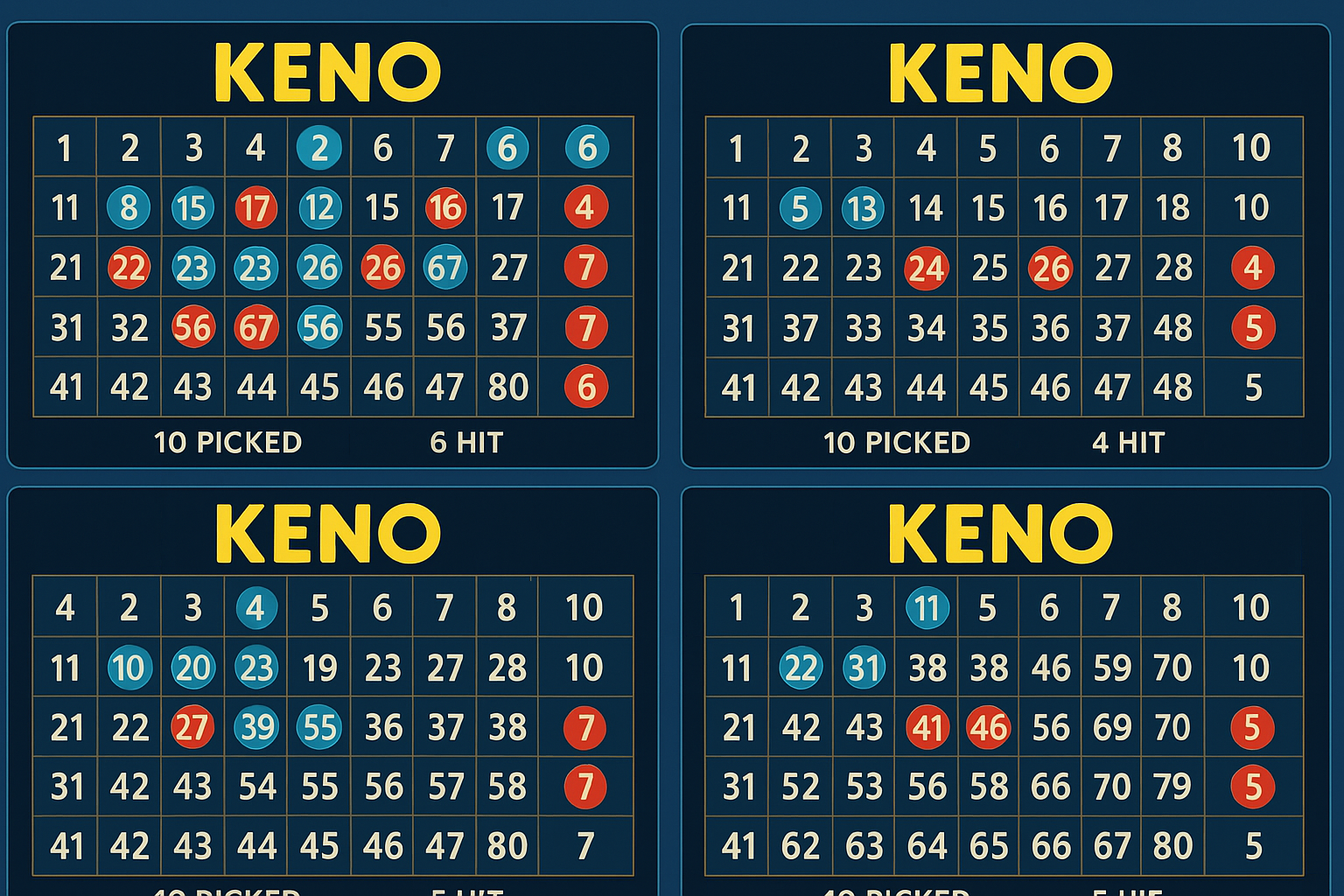
Consider a 4-card setup where:
Card 1 uses a box from numbers 11 to 19.
Card 2 repeats the pattern but shifts it to 31–39.
Card 3 mirrors the shape on the bottom right corner.
Card 4 uses a diagonal from 1 to 41 in increasing intervals.
If the draw skews toward mid-board ranges, all cards have a chance to benefit from this layered pattern structure. The key lies in thoughtful placement rather than random or aesthetic preferences. Over time, players might find that certain shapes align more frequently with the drawn numbers—and adapt accordingly.
Spot Size Optimization
The number of spots you select on each card—known as the "spot size"—directly influences both volatility and payout structure. Spot size optimization is about choosing the right number of picks per card to balance consistency with reward potential.
Choosing the Best Number of Spots for Each Card
In general, 4-spot to 6-spot cards are considered low-volatility options. They offer moderate payouts and hit more the 5 spot keno strategy balances volatility well frequently. On the other end, 8-spot to 10-spot cards provide larger payouts, but they require hitting more numbers to see returns.
Many seasoned players distribute their cards across a variety of spot sizes. For example, out of 20 cards:
5 might be 4-spot cards for quick hits,
10 might be 6-spot cards for steady returns,
5 might be 8- or 9-spot cards for high-payout potential.
This balance ensures that not all cards rely on the same level of difficulty. It also provides consistent data for players tracking performance and adjusting their approach over time.
Comparing Low-Spot vs. High-Spot Cards
Low-spot cards are generally better for those with limited bankrolls or who prefer longer sessions with smaller, frequent payouts. Their downside is low payout ceilings—even a perfect match might not cover much more than a few multiples of the original wager.
High-spot cards, on the other hand, often go several rounds without a win but can return substantial payouts when they hit. They’re best suited for players with a tolerance for variance and the patience to wait for high-reward draws.
In multicard keno, combining both types allows you to stay in the game longer while still having a shot at bigger wins.
Budget Bankroll Strategy
Effective bankroll management is central to any multicard keno strategy. Without it, even the most sophisticated techniques can fall apart quickly. The sheer number of cards in play, combined with the randomness of outcomes, makes budgeting essential for sustainable sessions and long-term consistency.
Managing Risk Across Multiple Cards
When playing 4, 10, or 20 cards at once, each wager adds up fast. Betting the maximum on every card may seem tempting, especially when chasing a big payout, but it creates a highly volatile structure. Instead, consider lowering the denomination per card to stretch your bankroll. For example, playing 20 cards at $0.10 each is often more effective than playing 5 cards at $1.00 each.
This scaling strategy allows for a greater number of rounds, which is vital in a game where outcomes fluctuate. By giving alternatively, some try the caveman keno style yourself more draws, you increase the opportunity to recognize patterns, adjust clustering zones, and benefit from streaks of hot numbers.
Some players also stagger their bets—placing higher wagers on cards that use optimized overlapping patterns or those with high-frequency numbers, and lower wagers on experimental or wide-range cards. This tiered structure gives weight to proven configurations while still allowing room to test new ideas.
How Many Cards to Play Per Round Based on Budget
The number of cards to play per round should be dictated not by the desire to win more, but by the size of your bankroll and your willingness to absorb variance. Here’s a basic guideline:
Small bankrolls ($20–$50): Limit to 4–6 cards at low denominations ($0.05–$0.10) each. Focus on mid-spot sizes for a mix of frequency and potential.
Moderate bankrolls ($50–$150): Play 10–20 cards at $0.10 each. This allows for solid coverage and strategic overlapping.
Larger bankrolls ($150+): Consider 20–40 cards with a range of bet amounts. Incorporate pattern play, varying spot sizes, and overlapping zones to maximize flexibility.
A fixed-session bankroll helps enforce discipline. Decide in advance how much you're willing to lose per session, and avoid exceeding it, even if you're close to a win. Walk-away discipline is often the difference between profitable and unprofitable players over time.
Expert Tips for Consistent Wins
Keno is largely a game of chance, but that doesn’t mean you can’t tilt the odds slightly in your favor with smarter play. These expert-level techniques revolve around observation, adaptation, and emotional control.
Tracking Frequency and Hot Numbers
Many video keno machines and online keno apps provide a readout of the most frequently drawn numbers over the last 50 or 100 games. This data can be players also test strategies like 7 spot keno valuable for short-term strategy. While each draw is technically independent, clusters of frequently drawn numbers—so-called "hot numbers"—can sometimes persist.
Experienced players use this trend tracking to inform their overlapping sets or clustered groupings. Instead of choosing numbers based on personal favorites or superstition, they respond to observed patterns in recent draw history.
However, don’t rely solely on hot number lists. Use them as part of a broader assessment of the board. If the machine or app allows, export or record past draws to review broader trends across multiple sessions.
Rotating Cards with Changing RNG Seeds
Random Number Generators (RNGs) drive keno outcomes in digital and video formats. While RNGs are designed to be fair and unpredictable, some players rotate their card sets after every few rounds, especially if they've gone cold.
Rotating doesn’t mean starting from scratch. Instead, it involves slightly adjusting card layouts—shifting clusters, altering patterns, or refreshing spot sizes. This prevents over-committing to stagnant configurations and allows for better adaptation if the draw sequence shifts direction.
In some games, restarting the machine or moving to a new one can reset the RNG seed. Although this doesn’t guarantee a better outcome, changing variables can help reset momentum and remove emotional biases formed by previous losses.
Setting Win/Loss Limits and Knowing When to Walk Away
Perhaps the most overlooked expert tip is also the simplest: know when to stop. Set clear win and loss limits before you begin playing. For example:
Win limit: “If I double my buy-in, I’ll cash out.”
Loss limit: “Once I’m down 30% of my budget, I’ll pause for the day.”
Consistently applying these limits prevents chasing losses and helps preserve capital for future sessions. It also conditions better judgment over time. Keno, particularly you can play keno online anytime multicard formats, can create streaky momentum. Recognizing when you're in a downswing and having the discipline to step away can protect both your bankroll and mental clarity.
Best Software and Apps for Multicard Keno
Multicard keno strategies benefit significantly from tools that track outcomes, simulate draws, and support advanced number analysis. Several apps and software programs are tailored specifically to help players refine their strategies.
Recommended Tools for Analysis
Some of the most widely used keno tools allow for bulk simulations, heatmap generation, and statistical reviews of number frequencies. Look for software that enables:
Draw logging across multiple sessions.
Pattern tracking based on user-defined number sets.
Clustering analysis showing which zones yield the most frequent hits.
Popular examples include Keno Analyzer Pro, MultiKeno Stats, and mobile apps like “Keno Way Master.” These tools often allow card exports, letting players apply strategies from practice sessions to real-world games.
How to Use Keno Simulators for Strategy Testing
Simulators offer a safe, risk-free way to test how your strategy performs over hundreds or even thousands of draws. With these tools, you can:
Run auto-draws using your custom card sets.
Compare different spot sizes and clustering strategies.
Analyze expected return per card and overall session.
This data-driven approach is particularly useful when refining overlapping techniques or optimizing card quantity. If one configuration outperforms others consistently in simulations, it can be worth applying in live gameplay—with appropriate bankroll management in place.
Real-World Case Studies and Player Insights
Observing real-world play is one of the most effective ways to understand how theory meets practice. Experienced multicard keno players often develop personalized systems based on trial and error, data collection, and disciplined adjustments. These case studies highlight how different approaches have produced consistent results—not necessarily massive jackpots, but reliable performance over time.
Interviews with Consistent Keno Winners
One long-term player who frequents 20-card keno machines at off-strip Las Vegas casinos described a habit of playing with structured overlap. He uses 5 central numbers on every card, rotating the remaining picks to cover adjacent clusters. His reasoning? “The fewer variables I deal with, the easier it is to track what’s working.” Over time, he noted that the overlap helped him hit two to three small wins per session, which allowed him to reinvest profit into longer plays without tapping new funds.
Another online player who specializes in 10-card games shared her method of alternating pattern types across sessions. One session might focus on horizontal lines; the next uses box configurations. This rotation learn the essentials in this article on how to play keno keeps results from plateauing and avoids anchoring bias. She logs every game—card configurations, wins, losses—and reviews the data weekly to make adjustments. “It’s more about math and rhythm than luck,” she explained.
These players don’t win every session, but their approach is consistent, measured, and based on evaluation rather than chasing instinct.
Sample Playthroughs and Win Breakdowns
Let’s consider a practical example using 20 cards:
Card Set-Up:
Cards 1–5: 4-spot, targeting hot number cluster in the 41–50 range.
Cards 6–10: 6-spot, using diagonal overlays across grid.
Cards 11–15: 7-spot, overlapping 5 core numbers and rotating two per card.
Cards 16–20: 8-spot, box pattern placed in each quadrant of the grid.
Over the course of a 50-draw session at $0.10 per card (total $2.00 per round), the player logs results. On average:
4-spot cards hit 2 or more numbers 28% of the time, enough to recoup small returns regularly.
6-spot and 7-spot cards yielded at least one medium win per session (matching 4 or 5 numbers).
An 8-spot card hit 6 numbers once, producing a payout that covered half the session’s cost.
While no large win occurred in this session, the combined low- to mid-tier hits recouped approximately 80% of the bankroll. This the cleopatra keno strategy adds visual appeal represents a common pattern in disciplined multicard play: losses minimized, bankroll extended, and odds leveraged through structure.
Common Mistakes to Avoid
While multicard keno opens the door to more strategic play, it also increases the risk of spreading your bankroll too thin or relying on flawed assumptions. Many players fall into predictable traps that undermine their overall performance. Avoiding these common errors is as important as choosing the right strategy.
Playing Too Many Cards Without a Plan
The appeal of playing 20 or 40 cards can be strong, especially when machines allow quick auto-fills or repeat entries. But using all available cards without a structured approach often leads to overlapping chaos or disconnected combinations that reduce overall odds of hitting useful patterns.
Simply put, more cards don’t equal more control. In fact, they can dilute strategic intent. Cards should serve a purpose—whether that’s covering a hot zone, applying a spot size variation, or executing a tested pattern. Filling cards randomly just to “have more in play” often leads to wasted bets and faster bankroll depletion.
Players should ask: What role does each card serve in my overall approach? If the answer isn’t clear, consider reducing the card count and refining each one for greater impact.
Ignoring Variance and RTP
Keno is a high-variance game with a low overall return-to-player (RTP) percentage compared to table games or slot machines. Expecting consistent results in every session is unrealistic. Multicard strategies are about improving long-term averages and smoothing out short-term volatility—not eliminating losses.
Some players assume that more cards or hot number use will dramatically improve win frequency, but outcomes are still tied to chance. Ignoring this fact leads to frustration, chasing behavior, and sometimes even doubling bet sizes in an attempt to recover—usually with negative results.
Experienced players recognize variance as part of the game and design their strategy around it. They use low-spot cards for frequency, mix in high-spot cards for potential, and accept that even great strategies have dry runs.
Falling for “Guaranteed Win” Myths
Search for multicard keno strategies online, and you’ll find claims of “surefire systems” or number formulas that supposedly beat the try various casino games that support keno strategies game. These often rely on anecdotal wins or coincidence presented as proof. The reality: no keno strategy guarantees consistent profits.
Winning streaks do happen—but so do extended losses. There’s no hidden pattern in RNG-generated draws that can be reliably exploited across sessions. Believing in guaranteed win systems sets players up for overconfidence, overbetting, and eventual disappointment.
Instead, success in multicard keno comes from sustainable play, adaptive strategy testing, disciplined budgeting, and realistic expectations. Even players who are “consistently winning” are often doing so by minimizing losses and extending play—not hitting jackpots every week.
FAQs
Is multicard keno better than single card?
Multicard keno provides more strategic flexibility than single card keno. Instead of relying on one set of numbers, you can spread risk, test different patterns, and overlap selections to increase the frequency of hits. For players who value structure, data analysis, and layered tactics, multicard play offers more control and engagement. That said, it also requires greater attention to bankroll and planning. Without a system, playing multiple cards can lead to faster losses than single-card play.
What’s the best number of cards to play at once?
There’s no universal answer—it depends on your bankroll, session length, and familiarity with your strategy. Many consistent players stick to 10 to 20 cards per round at low denominations. This range strikes a balance between coverage and clarity. Playing too few cards may limit pattern execution, while too many can blur tracking and drain funds. Starting with 4 or 10 cards and scaling upward as your system evolves is a measured approach.
Can I win real money consistently with this strategy?
You can see consistent returns—meaning frequent small wins and prolonged gameplay—but guaranteed profit isn't realistic. Multicard keno strategies improve the quality of play, manage volatility, and maximize session efficiency. Players who consistently follow a disciplined approach can minimize losses and occasionally capitalize on high-payout wins. However, consistent earnings in the sense of “predictable profit” are not a feature of any game driven by RNG outcomes.
How does variance affect multicard keno?
Variance is a major factor in keno. Even with 20 or 40 cards in play, it’s entirely possible to go several rounds without a significant win. Spot size, card overlap, number distribution, and draw randomness all influence how often and how much you win. Lower-spot cards reduce variance and hit more often with smaller payouts. Higher-spot cards carry more variance but offer large returns when successful. A balanced strategy accounts for this by combining both card types and setting clear win/loss limits.
Conclusion & Final Strategy Summary
Multicard keno offers players a structured and flexible way to engage with a game traditionally known for its randomness. While there are no guarantees in a draw-based game, strategic planning across multiple cards can help reduce volatility, maintain bankroll longevity, and create opportunities for small but frequent wins.
Which Multicard Keno Strategy Is Best for You?
The best strategy depends on your goals:
If you want consistency and steady engagement, focus on overlapping numbers and or play age of the gods keno for a themed experience spot sizes between 4 and 6. Use 10 to 20 cards and lean into frequency tracking.
If you’re playing for high-payout opportunities, mix in 8- or 9-spot cards with unique number clusters. Accept the lower hit rate in exchange for potential spikes in winnings.
If you enjoy pattern logic, implement diagonal, box, or mirrored configurations across your cards. This method offers structure and helps track outcomes over time.
If you're on a strict budget, manage bets per card carefully. It's better to play more cards at lower denominations with intent than fewer cards at max stakes.
Ultimately, the right multicard keno strategy aligns with your risk tolerance, your desire to experiment, and your ability to remain disciplined.
Final Words on Staying Disciplined and Smart
Multicard keno rewards players who think in terms of sessions, not individual draws. Discipline isn’t just about knowing when to stop—it’s about committing to structure, analyzing results, and resisting the urge to chase losses or abandon strategy after a short slump.
Keep logs of what works. Use software tools to test ideas. Adjust your cards when patterns stagnate. And most importantly, treat keno like a puzzle to explore, not a shortcut to a jackpot.
A smart, steady approach doesn’t just improve results—it makes every session more engaging and informed.