






Ranked play remains the heart of League of Legends. Every season, millions of players compete to climb the ladder, improve their skills, and reach higher divisions.
However, Riot Games has significantly evolved the ranked experience over the years. Placement matches, LP gains, MMR adjustments, role-based matchmaking improvements, Emerald tier, and seasonal resets have changed how players progress through the competitive ladder.
“Understanding the ranked system is often the difference between being stuck and climbing consistently.”
This updated 2026 guide explains the latest league of legends ranks, LP mechanics, MMR, placement games, rank distribution, seasonal resets, and proven strategies to climb faster in the current competitive environment.
What Are League of Legends Ranks?
League of legends ranks represent a player's competitive skill level within Riot's ranked matchmaking system.
Players earn League Points (LP) through victories and lose LP after defeats. Progressing through divisions eventually leads to promotion into higher ranks.
All League of Legends Ranks in 2026
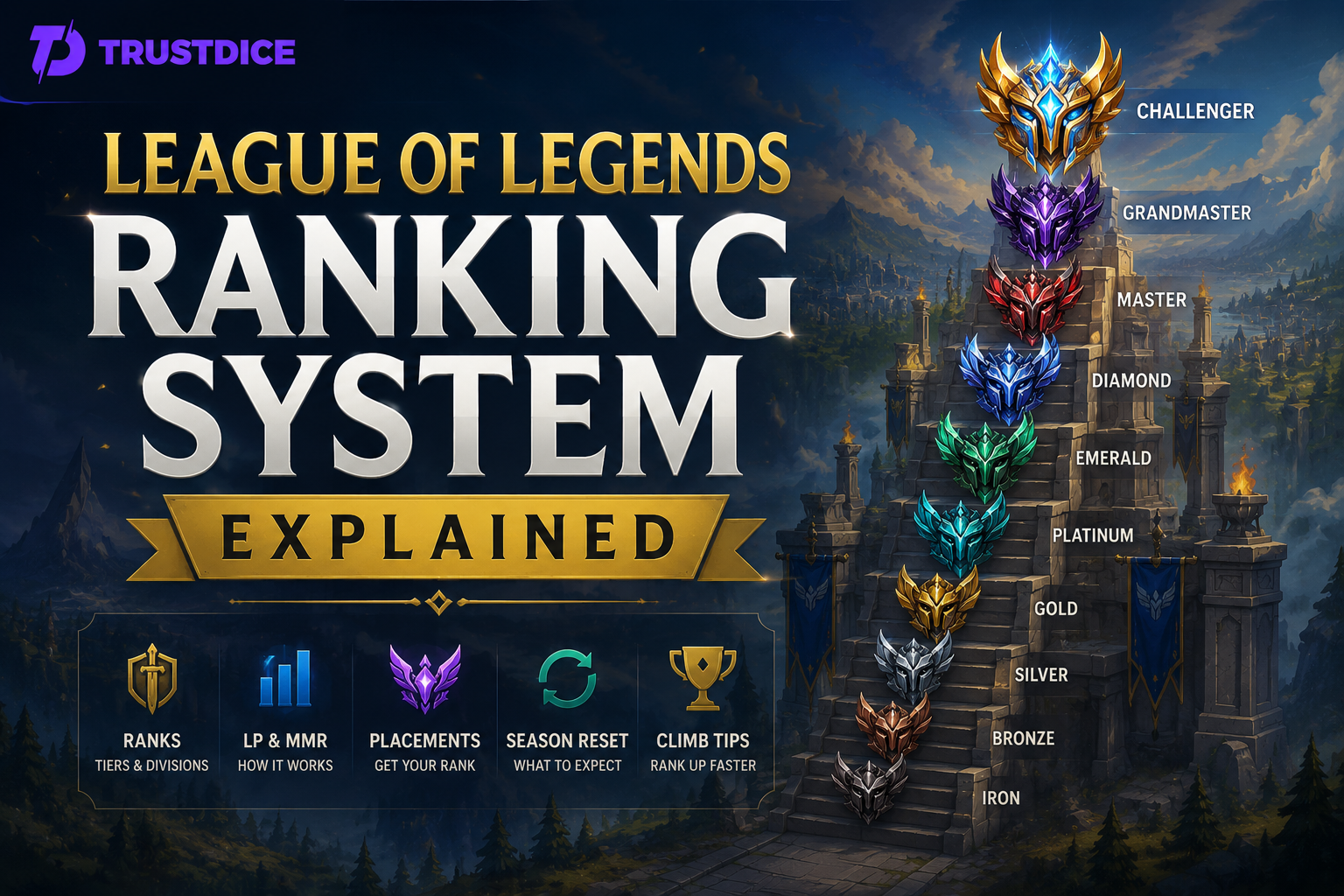
Riot currently uses the following rank structure:
| Rank | Divisions |
|---|---|
| Iron | IV – I |
| Bronze | IV – I |
| Silver | IV – I |
| Gold | IV – I |
| Platinum | IV – I |
| Emerald | IV – I |
| Diamond | IV – I |
| Master | Single Tier |
| Grandmaster | Single Tier |
| Challenger | Single Tier |
The introduction of Emerald significantly improved rank distribution by reducing the overcrowding previously seen in Platinum.
What Is Emerald Rank?
Emerald was introduced to create a smoother skill progression between Platinum and Diamond.
Before Emerald existed, a huge percentage of competitive players became clustered within Platinum tiers, making progression feel inconsistent.
Season 2026 Insight ⚡
Emerald now represents one of the largest groups of highly competitive players and acts as the bridge between above-average and elite gameplay.
Current Rank Distribution in 2026
Riot's ranked population is heavily concentrated in the middle tiers.
| Rank Group | Approximate Population Trend |
|---|---|
| Iron–Bronze | New and casual players |
| Silver–Gold | Largest player segment |
| Platinum–Emerald | Competitive players |
| Diamond+ | Top percentage of players |
| Master+ | Elite players |
Understanding where you sit within the overall ladder helps provide realistic improvement goals when climbing league of legends ranks.
How LP Works
LP (League Points) determines progression through divisions.
Players gain LP after wins and lose LP after losses.
| Result | Typical LP Change |
|---|---|
| Victory | +18 to +30 LP |
| Defeat | -18 to -30 LP |
Actual gains vary based on hidden matchmaking ratings and account performance.
What Is MMR?
MMR (Matchmaking Rating) is Riot's hidden skill rating system.
While LP is visible, MMR determines:
- Who you play against
- LP gains
- LP losses
- Promotion speed
Players with strong MMR typically gain more LP per victory and lose less LP after defeats.
How Placement Matches Work
At the beginning of each season, players complete placement matches to establish their initial rank.
Placement games evaluate:
- Previous season rank
- Hidden MMR
- Win-loss record
Strong placement results often accelerate progression through lower divisions.
Seasonal Resets Explained
Riot uses seasonal resets to keep the ranked ladder competitive.
Players generally begin slightly below their previous season finish and must climb again.
These resets help maintain matchmaking quality while encouraging continued participation.
Master, Grandmaster, and Challenger
The highest league of legends ranks operate differently from lower tiers.
Master
Players enter Master after surpassing Diamond I and meeting LP requirements.
Grandmaster
Grandmaster includes the strongest players below Challenger.
Challenger
Challenger contains the top-ranked players on each regional server.
Elite Competition 🔥
Challenger players represent a tiny fraction of the overall player base and often compete at semi-professional or professional levels.
How Duo Queue Works in 2026
Riot continues restricting Duo Queue at the highest tiers to maintain competitive integrity.
In most ranks, players may queue with a partner who falls within Riot's allowed rank range.
This encourages coordinated gameplay while preserving matchmaking fairness.
What Causes Players to Get Stuck?
Many players blame teammates, but long-term climbing is usually influenced by personal consistency.
| Common Problem | Impact |
|---|---|
| Champion Pool Too Large | Inconsistent performance |
| Poor Macro Decisions | Lost objectives |
| Weak Vision Control | Reduced map awareness |
| Tilt Queueing | Lower win rates |
Best Ways to Climb League of Legends Ranks
1. Limit Your Champion Pool
Most successful climbers focus on two to four champions.
2. Learn Objective Trading
Dragons, Baron, and Void objectives often determine outcomes more than kills.
3. Improve Wave Management
Understanding slow pushes, freezes, and crash timings creates significant advantages.
4. Review Your Games
Identifying recurring mistakes accelerates improvement dramatically.
5. Stay Consistent
Long-term improvement matters more than short winning streaks.
How Professional Play Influences Ranked Meta
Professional tournaments constantly affect Solo Queue trends.
Champions showcased during MSI and Worlds often experience spikes in pick rates and popularity.
This influence extends to communities discussing betting on lol and professional team performance throughout the season.
Why Macro Matters More at Higher Ranks
Mechanical skill helps players climb initially, but macro decision-making becomes increasingly important in higher tiers.
Elite players excel at:
- Objective control
- Vision management
- Wave manipulation
- Cross-map decision making
- Teamfight positioning
These skills separate Diamond and Master players from the rest of the ladder.
How Ranked Relates to Esports
Ranked play serves as the foundation of professional League of Legends.
Most professional players originally developed their skills through Solo Queue progression before entering organized competition.
Fans following major tournaments often explore topics such as lol bets, roster changes, and tournament predictions while tracking top-ranked players.
Likewise, communities centered around esports betting and esports betting sites frequently analyze Challenger-level players and professional trends when evaluating upcoming matches.
How Long Does It Take to Reach Higher Ranks?
Progress varies significantly between players.
| Target Rank | Typical Requirement |
|---|---|
| Gold | Strong fundamentals |
| Platinum | Consistent mechanics |
| Emerald | Reliable macro knowledge |
| Diamond | Advanced decision making |
| Master+ | Elite consistency |
Final Thoughts
Understanding modern league of legends ranks is essential for anyone serious about improving in Season 2026.
Riot's ranking system now offers a clearer progression path through Iron, Bronze, Silver, Gold, Platinum, Emerald, Diamond, Master, Grandmaster, and Challenger.
Whether you're aiming for Gold rewards, pushing into Emerald, studying professional gameplay, or following discussions around betting on lol, mastering the fundamentals of ranked progression will dramatically improve your long-term results.
FAQ
What is the newest League of Legends rank?
Emerald is the newest permanent rank tier added between Platinum and Diamond.
Does MMR still exist?
Yes. Hidden MMR continues to influence matchmaking and LP gains.
What rank is considered above average?
Generally, Platinum and Emerald players are considered above average within the ranked population.
How do I climb faster?
Focus on a small champion pool, improve macro decisions, review games, and maintain consistency over time.