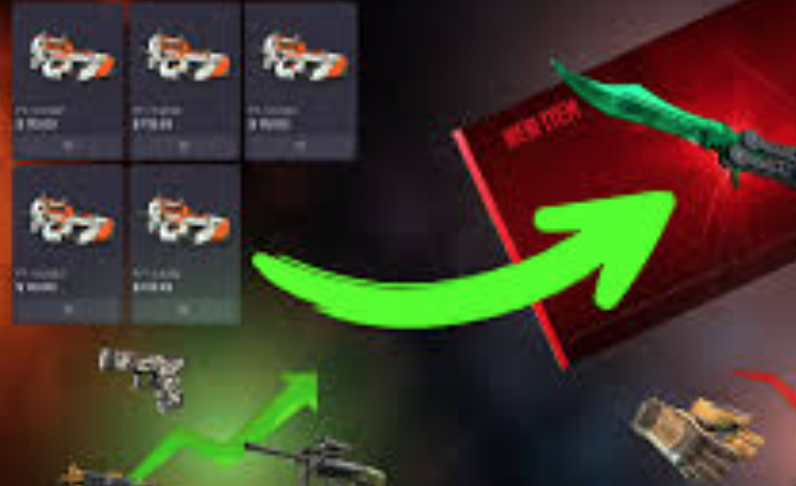








The 2025 collapse of the cs2 skin market revealed a brutal truth about virtual economies: centralization breeds fragility. Players lost millions in digital assets because they never truly owned them — Valve did. But what if Counter-Strike 2’s skins had been structured as NFTs on a transparent blockchain? Could immutable ownership, open verification, and decentralized liquidity have prevented the crash that shattered player trust?
Two Worlds, One Concept: Digital Ownership
Both NFTs and CS2 skins represent digital collectibles. Yet their fundamental difference lies in ownership:
- CS2 skins exist within Valve’s closed system — tradable only on approved platforms.
- NFTs exist on public ledgers — verifiable, transferable, and immune to centralized control.
When the cs2 skin odds changed post-patch, the ripple effect destroyed value instantly because players lacked transparency or control. In contrast, blockchain-based items live on immutable networks, making price manipulation or hidden algorithm changes nearly impossible.
The Core Problem: Lack of Transparency
The root cause of the meltdown wasn’t volatility — it was opacity. Valve never disclosed the real math behind cs2 skin odds. Players trusted a black box, and when that trust broke, so did the economy. NFTs, by design, are transparent: ownership, rarity, and even minting logic are open for anyone to audit.
This transparency is what powers decentralized ecosystems like esports betting and blockchain casinos, where outcomes can be cryptographically proven to be fair. Imagine if every CS2 case opening came with an on-chain proof verifying its randomness — the debate over rigged odds would vanish overnight.
Why the Market Collapsed: Centralized Fragility
Valve’s system made players stakeholders without rights. The cs2 skin market depended on one company’s servers, data, and algorithmic integrity. When patch 1.89 changed drop probabilities and pricing formulas, the effect was instantaneous — with no external audit or backup system. This single point of failure contrasts sharply with blockchain’s decentralized resilience.
NFTs and Provable Scarcity
Scarcity drives value. But in CS2, scarcity was always trust-based, not provable. With NFTs, rarity is coded — each token is unique, publicly traceable, and tamper-proof. If CS2’s legendary knives had been minted as NFTs, collectors could verify total supply and historical ownership without relying on Valve’s internal numbers.
| Feature | Traditional CS2 Skins | Blockchain NFTs |
|---|---|---|
| Ownership | Centralized (Valve) | Decentralized (Player) |
| Transparency | Opaque | Public Ledger |
| Rarity Verification | Based on trust | On-chain metadata |
| Trade Limits | Restricted by Valve | Global P2P exchange |
| Provable Fairness | Absent | Built-in cryptography |
This table underscores why NFT-based design could have made the cs2 skin market both resilient and fair.
Integrating Blockchain into CS2 Skin Betting
The intersection between cs2 skin betting and blockchain already exists through decentralized marketplaces and cs2 betting eth platforms. In these ecosystems, skins or NFT analogues are tokenized for liquidity and provably fair wagering. A smart contract enforces fairness automatically — not a corporate server.
If Valve had adopted similar architecture, even cs2 bookmakers and cs2 esports bet operators could have integrated transparent asset valuation, making manipulation impossible.
The Data Layer: Auditable Fairness
On-chain transparency extends beyond ownership. It enables verifiable randomness — crucial for maintaining confidence in cs2 gold odds and drop systems. Players could see, in real time, how probabilities are calculated, validated, and hashed.
Such “provably fair” architecture already powers trusted esports betting sites that guarantee integrity through cryptographic proofs. It’s not science fiction — it’s existing technology that CS2 ignored.
Economic Stability: How Decentralization Dampens Volatility
A key argument against blockchain is volatility — yet the 2025 crash proved that centralization is far riskier. In blockchain-based markets, value doesn’t rely on one actor’s discretion; it’s shaped by transparent supply, liquidity pools, and decentralized consensus.
By contrast, the cs2 skin market was vulnerable to a single patch note. Blockchain’s distributed nature would have spread that shock across multiple nodes and liquidity providers, cushioning its impact.
The NFT Model of Collateralization
Tokenized skins could serve as collateral in smart contracts, enabling secure borrowing, lending, and staking. For instance, a player could stake a knife NFT for tournament entry or use it as margin in cs2 handicaps betting. The item’s value would be verified instantly by on-chain oracles, ensuring fair risk calculation for both parties.
This model mirrors DeFi’s financial logic — but with esports and collectibles at its core.
Lessons from Web3 Gaming
Blockchain-based titles like Illuvium and Gods Unchained have already proven that transparent asset economies can thrive sustainably. Every transaction is public, every rarity count verifiable. Players, not publishers, define value — a philosophy the CS2 community increasingly demands.
Integrating such mechanics into Valve’s ecosystem wouldn’t just prevent another meltdown — it would create new bridges between gaming and finance, enhancing credibility within esport betting and global digital trading.
Challenges: Blockchain Isn’t a Magic Fix
While decentralization solves transparency, it introduces its own hurdles:
- Scalability — on-chain operations can be slow and costly.
- Security — smart contracts are only as safe as their code.
- Regulation — NFTs blur legal lines between collectibles and securities.
- User experience — mainstream players may resist crypto complexity.
That said, hybrid systems — combining blockchain transparency with centralized UX — offer the best of both worlds. Platforms like cs2 esports betting sites are already testing this model successfully.
Table: Comparing Outcomes — Traditional vs. Blockchain-Based Market
| Criterion | Traditional Skin Market | Blockchain Skin/NFT Market |
|---|---|---|
| Market Transparency | Hidden | Fully Public |
| Fairness Verification | Unavailable | On-chain Proofs |
| Ownership Transfer | Permissioned | Global & Peer-to-Peer |
| Manipulation Risk | High | Low (auditable) |
| Asset Liquidity | Centralized Marketplaces | DeFi & Exchanges |
| Economic Resilience | Patch-Dependent | Distributed Stability |
Regulatory Implications: From Loot Boxes to Digital Securities
Governments are increasingly scrutinizing in-game economies. Had CS2 used NFT-backed assets, it might have fallen under digital securities or collectible laws — bringing oversight but also legitimacy. Such transparency could protect users the way financial regulators monitor esports odds and gaming transactions.
Could NFTs Coexist with Valve’s Ecosystem?
Yes — if implemented as a “layer-two” system. Valve could maintain gameplay control while recording ownership and rarity data on a sidechain. Players could trade freely without compromising the integrity of the core engine. This hybrid approach would turn skins into verifiable NFTs while keeping the familiar Steam interface intact.
Expert Perspective
Blockchain researcher Dr. Marisa Cheng comments:
“The CS2 meltdown wasn’t inevitable — it was architectural. Centralized systems fail silently; decentralized systems fail transparently. If skins were NFTs, the crash would’ve been painful, but not opaque — and transparency is what preserves trust.”
The Future of Gaming Assets
The convergence of Web3, esports, and collectibles is inevitable. As cs2 skin betting evolves and crypto liquidity deepens, transparency will no longer be optional — it will be a competitive advantage. Blockchain isn’t just a safety net; it’s a new foundation for digital value.
Final Thought
Had Valve embraced blockchain earlier, the cs2 skin market crash might have been a correction — not a catastrophe. NFTs could have safeguarded ownership, verified fairness, and prevented manipulative opacity. The lesson is clear: transparency sustains trust, and trust sustains value. As the future of esports betting and gaming economies unfolds, blockchain’s open architecture will not just prevent the next meltdown — it will redefine what fair play means in the digital age.