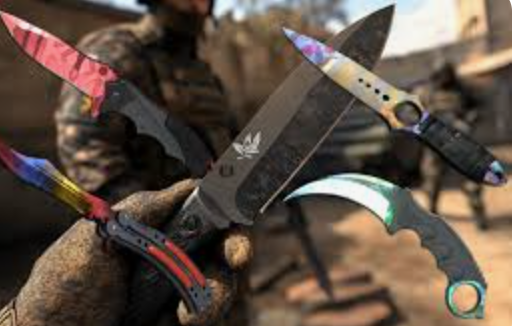








Why do players keep spending hundreds of dollars combining five red skins for a one-in-twenty chance at gold? The “five-red-to-gold” phenomenon isn’t just about profit — it’s about psychology, ritual, and the deep human desire to outsmart randomness. What’s happening in the cs2 skin market is not just an economy — it’s a behavioral experiment that blurs the line between gaming and gambling.
From Probability to Obsession
Every trade-up in CS2 carries a small chance of producing something extraordinary. But the five-red method amplified this by introducing both high stakes and ritualistic behavior. Players report specific “lucky times” or “sacred sequences” when combining items — as if certain patterns can influence cs2 skin odds. This illusion of control is one of the most powerful psychological forces in gaming.
Even when math proves otherwise, emotion wins. It’s not about *knowing* the odds — it’s about *feeling* like you can bend them.
The Neuroscience of the Drop
Neuroscientists studying reward systems explain why the five-red ritual is so addictive. Each attempt triggers the brain’s dopaminergic pathway — the same neural circuit activated by slot machines or esports betting. But what makes it uniquely powerful is **variable reinforcement** — the idea that unpredictable rewards are more exciting than consistent ones.
When a player hits gold, dopamine spikes dramatically. When they fail, the anticipation of “maybe next time” still releases smaller bursts of the same chemical. The result: a feedback loop of uncertainty and excitement that keeps players engaged indefinitely.
Rituals as Coping Mechanisms
Across communities, you’ll find endless examples of “ritual crafting”:
- Only trading up on full moons or at specific times.
- Using the same knife or glove during every attempt.
- Rearranging inventory slots before confirming the trade-up.
These rituals don’t change the cs2 skin odds — but they create emotional comfort. By ritualizing randomness, players reduce anxiety and regain a sense of control. It’s the same psychology observed in casino gamblers tapping machines for luck or sports fans wearing “winning jerseys.”
The Illusion of Control and Confirmation Bias
Humans are pattern-seeking creatures. When something as chaotic as RNG (random number generation) governs value, people look for meaning. That’s how myths like “third try’s the charm” or “inventory weight affects drops” take hold.
Once a player hits gold after performing a ritual, confirmation bias kicks in — the brain selectively remembers the “success” and forgets all the failures. The story becomes truth, and truth becomes tradition. This transforms the cs2 skin market from data-driven trading into cultural superstition.
Social Reinforcement: Streamers as Modern Shamans
Streamers have turned this ritual into performance art. Hundreds of thousands watch live trade-ups, each one punctuated by shouts, chants, and collective suspense. The streamer becomes a kind of digital shaman — performing a ceremony for luck while viewers emotionally invest in the outcome.
When a gold appears, the audience erupts. When it doesn’t, they still feel the dopamine hit of shared risk. This communal reinforcement normalizes gambling behavior under the banner of entertainment, paralleling engagement strategies used by cs2 esports betting sites and casino streamers.
The Economics of Emotion
Ritual behavior doesn’t just shape psychology — it reshapes prices. When enough people *believe* they can influence RNG, demand for red-tier skins spikes. That belief inflates supply shortages, pushing prices upward across the cs2 skin market.
| Behavioral Driver | Market Impact | Example |
|---|---|---|
| Superstition & Ritual | Artificial scarcity | “Lucky” skins bought in bulk |
| Streamer Influence | Price surges | Featured reds double in value |
| Community FOMO | Increased liquidity volatility | Rush on red-tier listings |
The result? A market governed by psychology rather than probability.
Risk Perception and Cognitive Distortion
Psychologists describe two types of decision-makers in uncertain systems: **maximizers** (who chase optimal outcomes) and **satisficers** (who settle for good enough). In the five-red craze, most players act as maximizers — continually chasing perfection despite decreasing odds.
This leads to **cognitive distortion**, where players underestimate the risk of failure and overestimate personal skill. It’s a pattern identical to that found in betting on esports or traditional gambling. The brain mistakes near-misses for progress.
The Feedback Loop Between Luck and Logic
Interestingly, even rational traders aren’t immune. Some data analysts who study cs2 gold odds still perform rituals “just in case.” They know the math — yet they can’t resist adding superstition to their strategy. This fusion of analytics and myth reflects the human need to find patterns in randomness, even when none exist.
The Paradox of Randomness
Valve’s design intentionally keeps randomness opaque to preserve excitement. But that very secrecy fuels ritualization. If the company published transparent cs2 skin odds, belief systems might collapse — along with part of the game’s thrill.
This paradox mirrors the tension in esports betting: the more transparent the odds, the less “mystery” the system holds, which reduces engagement.
Comparing Ritual to Real-World Gambling Behavior
Casino psychologists note identical rituals among gamblers:
- Pressing the spin button in a specific rhythm.
- Whispering phrases before rolling dice.
- Only betting on “lucky numbers.”
The five-red-to-gold method replicates this behavior perfectly within digital spaces. Every action gives players a false sense of influence over random systems, strengthening emotional attachment while disguising statistical loss.
How Rituals Drive Market Volatility
When collective belief meets limited supply, chaos follows. During peak superstition phases — often after viral clips — the cs2 skin market sees unprecedented spikes in both price and volume. This mimics speculative surges in cs2 skin betting, where hype outweighs fundamentals.
Once belief fades, those same markets crash. Faith, not math, determines momentum.
The Ethical Dilemma
Valve’s challenge is ethical as much as economic. The five-red ritual engages players deeply — but also exploits psychological vulnerabilities. Experts compare it to gamified micro-betting, where the illusion of choice masks a lack of control.
Introducing loss-limits, warning labels, or verified cs2 skin odds could promote safer engagement without killing the fun. After all, transparency doesn’t ruin magic — it refines it.
Community Self-Regulation
Interestingly, parts of the community have started building self-regulation tools. Discord bots now track personal spending on trade-ups. Fan websites calculate true probabilities and highlight negative expected returns. Some even integrate crypto-based tracking inspired by cs2 betting eth platforms to log every attempt transparently.
In other words, players are doing what the publisher hasn’t — adding accountability to randomness.
Expert Insight
Behavioral scientist Dr. Nora Velasquez summarizes it best:
“Rituals aren’t irrational — they’re emotional armor against chaos. In CS2, the five-red system provides players with meaning in an unpredictable economy. It’s not just gambling — it’s storytelling disguised as statistics.”
Breaking the Cycle: Education Over Elimination
Rather than removing trade-ups, experts advocate education. By teaching players about probability, loss aversion, and confirmation bias, Valve could help users enjoy the thrill responsibly. Similar strategies have proven effective in esports betting sites, where informed users engage more sustainably.
Knowledge transforms addiction into understanding — and that’s where true empowerment lies.
Final Thought
The five-red-to-gold craze is a fascinating window into the human mind. It reveals how belief, ritual, and randomness can coexist in a digital economy. Whether it’s luck, superstition, or sheer hope, the phenomenon proves one thing: people don’t play for profit — they play for meaning. And as long as the cs2 skin market continues to balance risk, emotion, and mystery, the rituals will never stop. After all, every failed trade-up still whispers the same promise: *maybe the next one is gold*.