






Split has always been one of the most iconic maps in VALORANT. Known for its towering vertical design, narrow chokepoints, ropes, and utility-heavy gameplay, Split rewards coordination and map control more than almost any other map in the game.
Since Riot reintroduced and updated Split, the map has continued evolving through balance adjustments, agent meta shifts, and professional innovations. Many older strategy guides no longer reflect the current 2026 competitive environment, making it important to understand how modern teams approach split valorant.
"On Split, controlling Mid often means controlling the entire round."
This updated guide covers the latest Split layout, optimal agent compositions, attack and defense strategies, important callouts, common mistakes, and the professional meta shaping one of VALORANT's most tactical maps.
Why Split Is Unique Among VALORANT Maps
Unlike more open maps such as Haven or Sunset, Split heavily emphasizes vertical control and utility coordination.
- Extensive rope mechanics
- Multiple elevation levels
- Tight chokepoints
- Strong defensive positions
- Critical Mid control battles
These elements create a map where teamwork often outweighs individual mechanics.
| Feature | Strategic Impact |
|---|---|
| Ropes | Fast vertical rotations |
| Narrow Entrances | Heavy utility requirements |
| Elevated Positions | Strong defender advantage |
| Mid Control | Opens both bomb sites |
Split Layout Overview
split valorant features a traditional two-site structure:
- A Site
- B Site
- Central Mid area
However, unlike simpler maps, Mid serves as the central strategic battleground. Teams that successfully control Mid gain access to multiple attack routes and significantly improve their ability to pressure defenders.
Updated Split Callouts Every Player Should Know
A Site Callouts
- A Main
- A Ramps
- A Heaven
- A Screens
- A Site
- A Tower
Mid Callouts
- Mid Plaza
- Mid Mail
- Mid Vent
- Mid Top
- Mid Bottom
B Site Callouts
- B Main
- B Heaven
- B Tower
- Garage
- Back Site
Effective communication around these locations is essential for success on Split.
Current Best Agents on Split (2026 Meta)
Split's tight design heavily favors agents capable of controlling space and denying chokepoints.
| Agent | Why They're Strong |
|---|---|
| Omen | Flexible smokes and vertical utility |
| Raze | Explosive entry power |
| Cypher | Information gathering and flank control |
| Killjoy | Site anchoring strength |
| Skye | Initiation and information utility |
| Fade | Excellent Mid control support |
The modern professional meta frequently revolves around combinations of Controllers, Sentinels, and information-heavy Initiators.
Why Mid Control Wins Games on Split
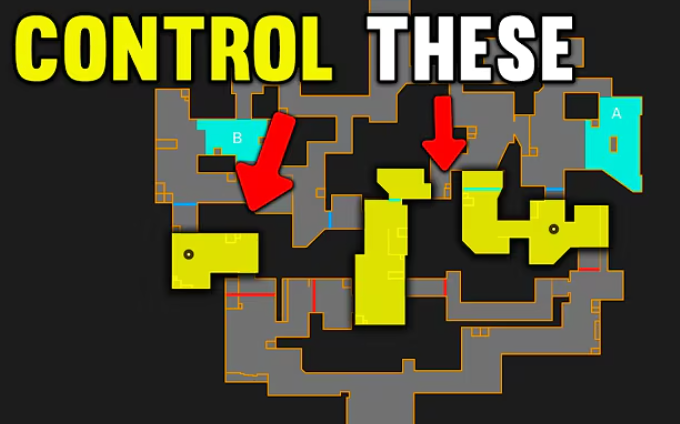
Mid remains the most important area on the map.
Key Concept ⚡
Teams that consistently control Mid gain flexibility, faster rotations, and access to weaker defensive angles.
Mid control allows attackers to:
- Pressure A through Vent
- Attack B through Mail
- Force defensive rotations
- Gather critical information
Professional teams rarely commit to site executions on Split without first contesting Mid presence.
Best Attacking Strategy for A Site
A Site attacks generally revolve around controlling:
- A Main
- A Ramps
- Mid Vent access
Strong A Execute Example
- Take A Main control
- Smoke Heaven and Screens
- Clear Ramps utility
- Pressure from Vent if possible
- Plant for post-plant positions
Layered utility is critical because defenders have numerous elevated angles to contest site entries.
Best Attacking Strategy for B Site
B Site attacks often become easier after securing Mid.
Successful teams usually:
- Control Mid Mail
- Split defenders between Heaven and Site
- Use coordinated utility clears
- Establish post-plant crossfires
Direct B Main rushes can work occasionally but are generally less reliable against organized opponents.
Defending Split in the Current Meta
Defenders enjoy strong positional advantages but must avoid becoming predictable.
| Defensive Priority | Purpose |
|---|---|
| Hold Mid | Deny attacker flexibility |
| Utility Preservation | Delay site hits |
| Crossfires | Maximize choke point defense |
| Information Gathering | Enable timely rotations |
Many professional teams rotate later than expected because premature rotations can be punished heavily on Split.
How Riot's Changes Affected Split
Since its original release, Riot adjusted several areas of Split to improve balance between attackers and defenders.
Updates included:
- Wider pathways
- Adjusted angles
- Improved site access
- Refined Mid engagements
These changes helped reduce the extreme defender-sided tendencies that existed in earlier versions of the map.
Most Common Mistakes Players Make on Split
| Mistake | Consequence |
|---|---|
| Ignoring Mid | Limited attack options |
| Dry peeking Heaven | Easy defender advantage |
| Poor utility timing | Failed site entries |
| Over-rotating | Weak site coverage |
Professional Split Meta in 2026
VCT teams continue to view Split as one of the most tactical maps in the competitive pool.
Current trends include:
- Heavy Mid defaults
- Double-initiator setups
- Delayed executes
- Utility-focused site hits
Tactical complexity is one reason Split frequently appears in discussions involving esport betting and professional match analysis.
How Split Influences Esports Strategy
Unlike simpler maps, Split often highlights coaching preparation and team structure.
Analysts evaluating VCT matches frequently focus on:
- Mid-round adaptations
- Utility efficiency
- Site execution success rates
- Agent composition choices
These factors are regularly considered when discussing esports bet opportunities and professional tournament predictions.
Best Tips for New Split Players
1. Learn Mid First
Understanding Mid routes unlocks the entire map.
2. Respect Vertical Angles
Always check elevated positions before advancing.
3. Use Utility Before Entering
Split punishes uncoordinated aggression.
4. Communicate Rotations
Information is often more valuable than kills.
Why Split Remains a Fan Favorite
Despite its complexity, Split remains one of the most beloved maps in VALORANT.
Its combination of vertical combat, tactical depth, and strategic flexibility creates highly entertaining matches for both players and spectators.
Fans following VCT events and betting on esports discussions often consider Split one of the most skill-testing maps in the game.
Final Thoughts
Modern split valorant gameplay revolves around Mid control, coordinated utility usage, and disciplined rotations.
Whether you're climbing Ranked, competing in Premier, or studying professional VCT matches, mastering Split's vertical structure and tactical nuances can dramatically improve your performance.
As VALORANT continues evolving in 2026, Split remains one of the best examples of Riot's strategic map design and one of the most important battlegrounds in competitive play.
FAQ
Is Split attacker-sided or defender-sided?
Modern Split is relatively balanced, though defenders still benefit from strong vertical positions.
What is the most important area on Split?
Mid control remains the single most important area for both attackers and defenders.
Which agents are strongest on Split?
Omen, Raze, Cypher, Killjoy, Skye, and Fade are among the strongest current choices.
Why is Split considered tactical?
The map emphasizes utility usage, coordinated rotations, vertical combat, and strategic decision-making.